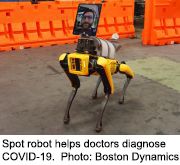









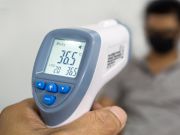
In response to the coronavirus pandemic, many doctors’ offices and clinics have made changes to protect patients, care providers and staff. As an example, here’s what’s being done at Penn State Health. “When our patients first call to schedule an appointment at any of our offices, outpatient clinics or centers, they’ll be screened for COVID-19,”…  read on >

In another troubling sign that the spread of coronavirus might be accelerating, new U.S. data shows hospitalizations in at least nine states have been on the rise since Memorial Day. In Texas, North and South Carolina, California, Oregon, Arkansas, Mississippi, Utah and Arizona, increasing numbers of COVID-19 patients are showing up at hospitals, the Washington…  read on >

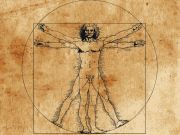
More than five centuries ago, Renaissance master Leonardo da Vinci produced a now-famous image of what he considered the perfectly proportioned male body: the “Vitruvian Man.” The drawing was inspired by even earlier pondering on the perfect human form by first-century A.D. Roman architect Vitruvius. Now, work done by American scientists involving high-tech scans of…  read on >

Scientists studying the SARS-CoV-2 coronavirus — which causes COVID-19 — believe they’ve discovered why face masks might help limit transmission of the virus. The virus tends to first infect the nasal cavity, replicating less well in the lower respiratory tract, University of North Carolina (UNC) researchers found. However, sometimes it’s sucked into the lungs, where…  read on >

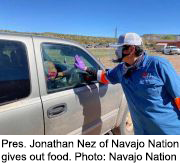
The U.S. center hardest hit by COVID-19 isn’t headline-grabbing New York City; it’s the Navajo Nation in the American southwest. About the size of West Virginia and situated on 27,000 square miles of land spread across Arizona, Utah and New Mexico, Navajo Nation is home to approximately 175,000 people. It’s also home to a coronavirus…  read on >

New York City finally reopened its economy on Monday after being the epicenter of the U.S. coronavirus pandemic for months, and a new study shows that stay-at-home orders may have been worth it, preventing nearly 60 million U.S. infections. The research, published in the Nature medical journal, examined how different social distancing policies and measures…  read on >

Back before coronavirus took over the headlines, every week seemed to bring another report about artificial intelligence besting human doctors at everything from diagnosing skin cancer to spotting pneumonia on chest X-rays. But these artificial intelligence (AI) tools — computer programs that get better at performing a task by being “trained” on the right kind…  read on >